
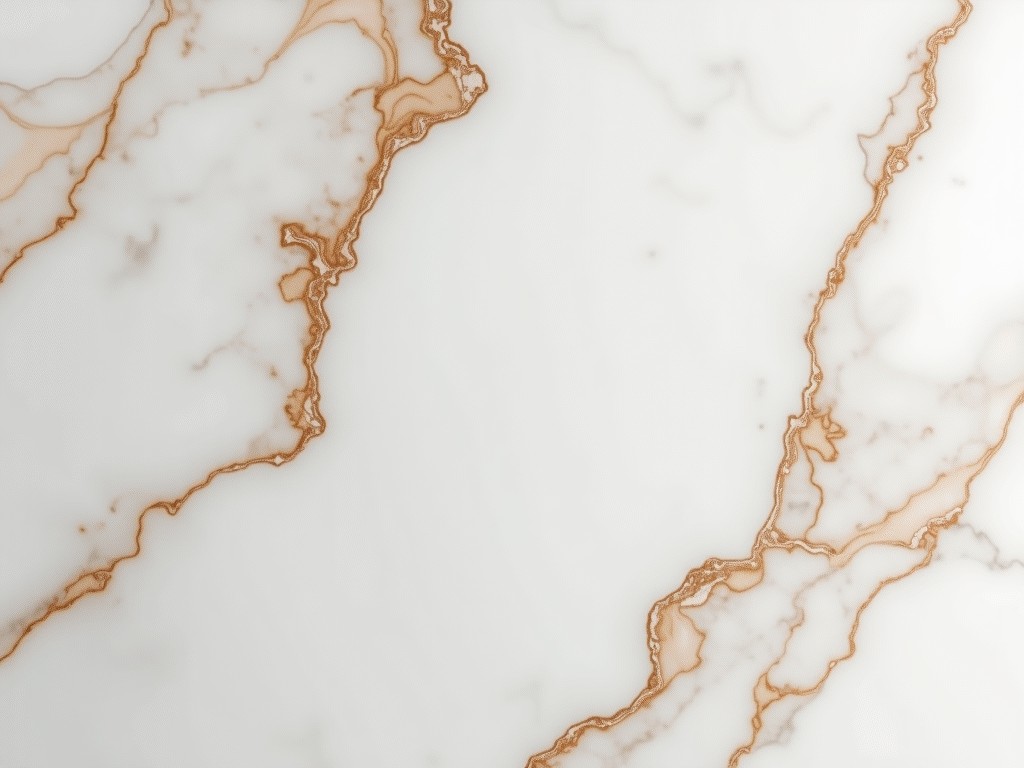
This product combines a high‑purity quartz aggregate with a polymer resin matrix to create a slab that replicates the appearance of white marble while incorporating brown veining through mineral
Inquire NowThis product combines a high‑purity quartz aggregate with a polymer resin matrix to create a slab that replicates the appearance of white marble while incorporating brown veining through mineral pigments. The quartz content typically ranges from 90 % to 95 % by weight, providing the hardness and chemical resistance associated with natural stone.
The slab consists of three primary components: quartz granules, a bisphenol‑A‑free epoxy or polyester resin, and inorganic pigments that generate the veining pattern. Quartz granules are selected for size distribution (0.1–2 mm) to achieve optimal packing density, which influences the final density of approximately 2.3 g/cm³. The resin binder comprises 5 %–10 % of the mass and determines flexural strength and impact resistance.
| Property | Typical Value | Test Standard |
|---|---|---|
| Compressive Strength | ≥ 180 MPa | ASTM C170 |
| Flexural Strength | ≥ 45 MPa | ASTM C880 |
| Water Absorption | ≤ 0.05 % | ASTM C97 |
| Mohs Hardness | 7 | ASTM C1353 |
| Coefficient of Thermal Expansion | 2.5 × 10⁻⁵ /°C | ASTM E831 |
Raw quartz is cleaned, dried, and blended with resin and pigments in a vacuum mixer to eliminate entrapped air. The mixture is then poured into a mold and subjected to vibration and pressure (≈ 100 bar) to achieve uniform compaction. Curing occurs in a heated press at 80 °C–90 °C for 20–30 minutes, after which the slab is cooled, gauged, and polished to the desired finish.
Due to the high quartz fraction, the slab exhibits low moisture absorption, making it suitable for wet environments such as kitchen countertops and laboratory benchtops. The resin matrix provides flexibility that reduces the likelihood of cracking under impact compared to natural marble. Chemical resistance testing shows minimal etching when exposed to common household acids (citric acid, vinegar) for up to 24 hours.
The aesthetic resemblance to white marble with brown veining makes this material a preferred choice for interior design projects where the look of natural stone is desired without its maintenance drawbacks.
Slab dimensions can be tailored to project requirements, with standard thicknesses of 20 mm and 30 mm available, and custom thicknesses up to 40 mm upon request. Vein intensity and color hue are adjustable by altering pigment concentration during mixing, allowing for subtle or pronounced brown veining patterns. Edge profiles such as eased, beveled, ogee, and waterfall can be manufactured using CNC profiling equipment.
Each batch undergoes raw material verification for quartz purity (> 99 % SiO₂) and resin viscosity. In‑process monitoring includes slab thickness measurement (± 0.1 mm) and visual inspection for color uniformity. Final inspection involves a standardized abrasion resistance test (ASTM C241) and a surface gloss measurement (≥ 70 GU) to ensure consistent finish.
Installation follows standard adhesive‑set procedures using a polymer‑based thin‑set mortar compatible with quartz surfaces. Seams are filled with a color‑matched epoxy filler and polished to achieve a seamless appearance. Routine maintenance requires only mild detergent and water; abrasive cleaners should be avoided to preserve the polished surface.
Can dimensions be customized? Yes, length, width, and thickness can be adjusted according to project specifications; contact technical sales for details.
What information is required before quotation? Provide required slab size, thickness, edge profile, veining preference, and any needed cut‑outs for sinks or fixtures.
How is quality inspected? Each slab undergoes dimensional checks, visual inspection, and standardized mechanical tests before release.
What packaging methods are available? Slabs are packed in vertical A‑frames with corner protectors, wrapped in recyclable polyethylene film, and secured with steel straps for transport.
What is the typical production lead time? Lead time ranges from 2 to 4 weeks depending on order volume and customization complexity.
For technical datasheets, sample requests, or project‑specific quotations, please reach out to our engineering team via the contact form.
Request a QuoteQueenswood delivers modern bathroom solutions through original design, advanced manufacturing, and reliable quality for customers worldwide.


Middle of Xingang East Road, Haizhu District, Guangzhou City, Guangdong Province

