
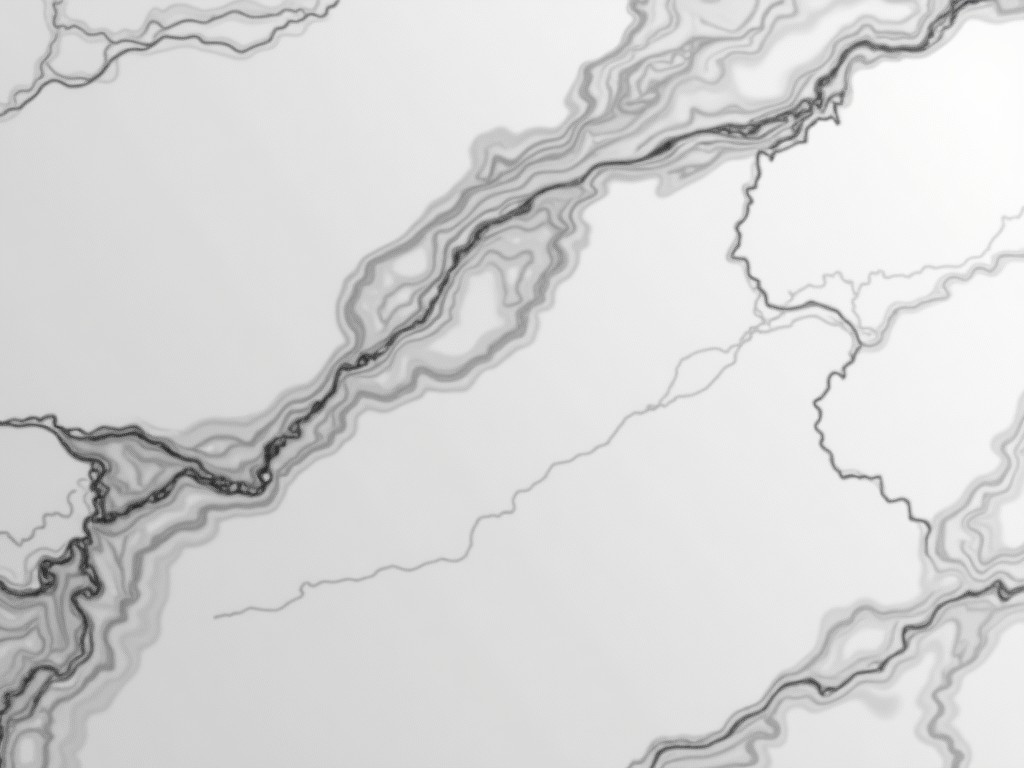
This product consists of a engineered stone slab where approximately 90‑95 % of the weight is natural quartz aggregate, bound with a polymer resin matrix and pigmented to achieve a base tone that
Inquire NowThis product consists of a engineered stone slab where approximately 90‑95 % of the weight is natural quartz aggregate, bound with a polymer resin matrix and pigmented to achieve a base tone that ranges from soft white to medium gray. The distinctive grey veins are introduced during the mixing stage using controlled dispersion of colored resins or digital printing techniques, resulting in a pattern that mimics natural stone while maintaining the uniformity of manufactured quartz.
Quartz hardness contributes to a Mohs rating of 7, providing resistance to scratching from common kitchen utensils. The bulk density typically falls between 2.2 and 2.4 g/cm³, which influences the slab’s weight and handling requirements. Water absorption measured per ASTM C97 is usually below 0.05 %, indicating a non‑porous surface that inhibits microbial growth and staining. The coefficient of thermal expansion is around 30 × 10⁻⁶ /°C, a value important for installations where temperature fluctuations occur.
Raw quartz granules are blended with resin, pigments, and additives in a vacuum mixer to eliminate air bubbles. The mixture is then vibrated under vacuum and pressed into a slab format at pressures exceeding 100 bar. Curing takes place in a heated chamber at temperatures between 85 °C and 95 °C for a prescribed duration, after which the slab is calibrated to thickness and polished to a specified gloss level. Vein patterns are created either by injecting colored resin streams at precise locations or by applying a high‑resolution digital inkjet layer before the final cure, allowing consistent replication of the grey veining across production batches.
Flexural strength tested per ASTM C158 typically reaches 45‑55 MPa, providing adequate resistance to bending stresses in over‑hang applications. Impact resistance, measured by the drop‑ball method, shows minimal chipping when a 500 g steel ball is dropped from a height of 1 m. Chemical resistance testing according to ANSI Z124.6 indicates no visible alteration after 24‑hour exposure to common household acids (citric, vinegar) and alkalis (ammonia solutions). UV stability is evaluated using ISO 4892‑2; the material shows less than 5 % color shift after 500 hours of accelerated exposure, making it suitable for indoor environments with direct sunlight.
In laboratory environments, the non‑porous surface reduces the risk of contaminant ingress and simplifies cleaning protocols for analytical workspaces. Healthcare facilities benefit from the material’s resistance to bacterial proliferation and its compatibility with stringent disinfectants used in surgical suites. Hospitality installations, such as hotel reception desks or restaurant service counters, leverage the aesthetic consistency of the veining while meeting durability demands for high‑traction foot traffic and frequent cleaning cycles.
Slab thickness can be specified from 12 mm up to 30 mm in 2 mm increments, affecting both weight and structural capacity. Edge profiles range from eased and bevelled to ogee and waterfall, each achievable through CNC profiling after curing. Vein intensity and scale are adjustable by modifying the concentration and dispersion rate of the colored resin during mixing, allowing designers to match a particular visual reference. Custom color matching to corporate palettes or existing architectural elements is feasible through adjustments to the base pigment system.
Each slab undergoes dimensional verification with laser gauges to confirm thickness tolerances of ±0.5 mm and length/width tolerances of ±2 mm. Spectrophotometric analysis checks color uniformity across the surface, accepting a ΔE*ab value below 2.0 relative to the approved master sample. Vein consistency is assessed via visual inspection under standardized lighting, with any deviation exceeding 10 % in pattern density flagged for rework. Surface gloss is measured with a gloss meter at 60°, targeting a range of 55‑70 GU depending on the requested finish. Final inspection includes a ultraviolet light scan to detect any resin curing inconsistencies that could affect long‑term performance.
Slabs are packed vertically in A‑frame steel crates equipped with corner protectors and foam edge guards to prevent chipping during transit. Each crate includes humidity‑absorbing desiccant packs to maintain a stable internal environment, reducing the risk of resin stress. A standard 20‑foot container can accommodate approximately 10‑12 slabs of 30 mm thickness, depending on the overall dimensions. Loading procedures follow ISTA 3A guidelines to ensure that shock and vibration limits remain within the material’s tolerance thresholds.
Yes, both length and width can be cut to precise tolerances using CNC sawing after the slab has been cured and polished. Custom cut‑outs for sinks, cooktops, or service openings are also available.
Lead times generally range from 3 to 4 weeks for standard thicknesses and finishes, extending to 5‑6 weeks when special edge profiles or custom vein patterns are requested.
Small sample pieces measuring 100 mm × 100 mm can be shipped upon request, allowing verification of color, veining, and finish under actual lighting conditions.
The material can be supplied with ASTM C158 flexural strength reports, ANSI Z124.6 chemical resistance data, and ISO 4892‑2 UV stability summaries, all provided as PDF documentation with each shipment.
For further information on specific performance data, customization possibilities, or to obtain a formal quotation, please contact our technical sales team via the inquiry form linked below.
Submit InquiryQueenswood delivers modern bathroom solutions through original design, advanced manufacturing, and reliable quality for customers worldwide.


Middle of Xingang East Road, Haizhu District, Guangzhou City, Guangdong Province

