
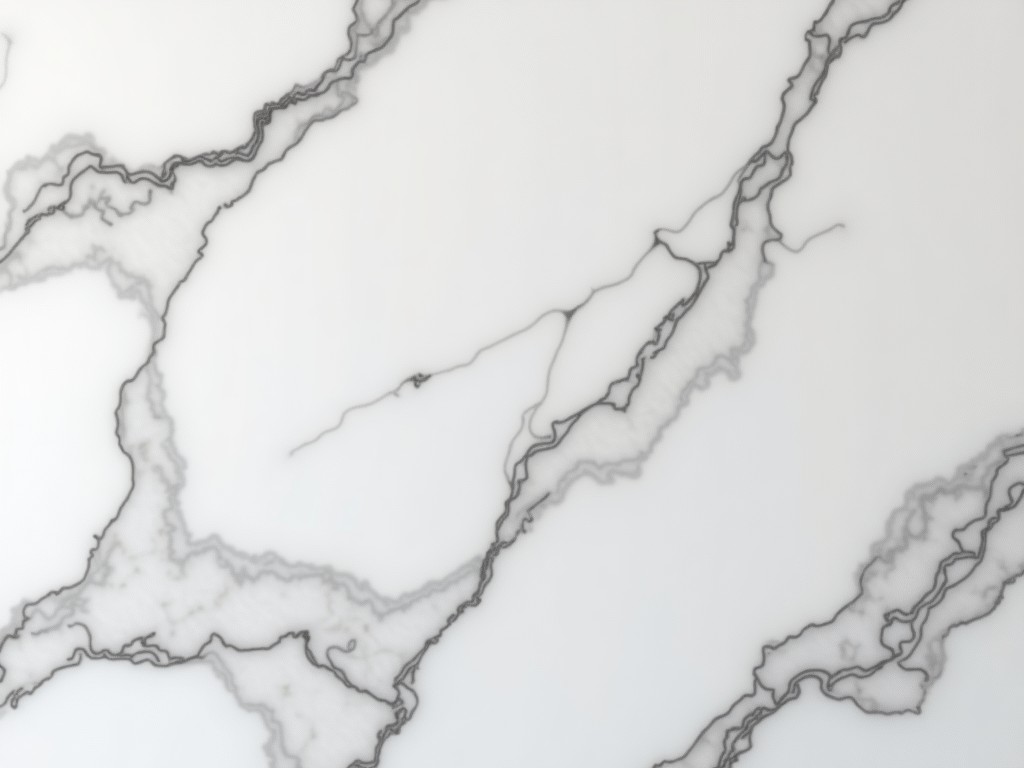
Engineered stone combines approximately 90% ground quartz with polymer resins and pigments to create a non‑porous slab. The grey veining is introduced through controlled pigment dispersion during
Inquire NowEngineered stone combines approximately 90% ground quartz with polymer resins and pigments to create a non‑porous slab. The grey veining is introduced through controlled pigment dispersion during mixing, replicating the appearance of natural marble while retaining quartz’s hardness.
The quartz aggregate provides a Mohs hardness of 7, contributing to scratch resistance. Resin binders, usually unsaturated polyester, fill interstitial spaces and impart flexural strength. Pigment particles are sized below 10 µm to ensure uniform color distribution and visible veining patterns.
Raw quartz, resin, and additives are batch‑mixed under vacuum to eliminate air entrapment. The mixture undergoes vibration compaction in a mold, then is cured in a heated press at up to 100 °C for 45 minutes. Slabs are subsequently gauged to thickness, polished, and inspected for surface integrity.
Typical mechanical values include a compressive strength exceeding 150 MPa and a flexural modulus around 20 GPa. Water absorption is less than 0.02 % by weight, rendering the surface resistant to staining from oils, acids, and solvents. Thermal expansion coefficient is approximately 25 × 10⁻⁶ /°C, allowing limited exposure to brief hot‑object contact without cracking.
| Property | Typical Value | Test Method |
|---|---|---|
| Compressive Strength | >150 MPa | ASTM C170 |
| Flexural Strength | >40 MPa | ASTM C880 |
| Water Absorption | <0.02 % | ASTM C97 |
| Hardness (Mohs) | 7 | ISO 10545-12 |
| Thermal Expansion | 25 × 10⁻⁶ /°C | ASTM E228 |
In laboratory environments, the non‑porous surface resists chemical spills and facilitates easy decontamination, meeting ISO 14644 cleanroom requirements. Healthcare facilities value the seamless appearance that eliminates grout lines where microbes could harbor, supporting infection‑control protocols. Hospitality installations benefit from the consistent veining pattern, allowing large‑area designs without visible repetition.
Each slab undergoes thickness verification with a tolerance of ±0.5 mm across the entire panel. Surface flatness is measured using a laser profilometer, accepting deviations under 0.3 mm over a 1 m span. Color consistency is evaluated with a spectrophotometer, ensuring ΔE<2 between veining and background areas.
Standard thicknesses are 20 mm and 30 mm, with custom dimensions available upon request. Edge profiles include eased, beveled, ogee, and waterfall styles, each achievable through CNC routing. Veining intensity can be adjusted by modifying pigment concentration during the mixing stage, allowing subtle or dramatic patterns.
| Parameter | Value | Notes |
|---|---|---|
| Density | 2.4 g/cm³ | Typical for quartz resin composite |
| Slab Weight (30 mm) | ≈72 kg/m² | Calculated from density |
| Finish Options | Polished, honed, leathered | Surface roughness Ra ≤0.2 µm (polished) |
| UV Stability | ΔE<5 after 500 h UV exposure | ASTM G154 |
Minimum order quantity is one full slab; larger volumes receive tiered pricing. Production lead time averages 10‑15 business days after final drawing approval, contingent on raw‑material availability. Slabs are packed in wooden crates with corner protectors and stretch‑film wrapping to prevent edge damage during transit.
To request a quotation or obtain samples, contact our sales team with project dimensions, required thickness, and edge profile preferences.
Queenswood delivers modern bathroom solutions through original design, advanced manufacturing, and reliable quality for customers worldwide.


Middle of Xingang East Road, Haizhu District, Guangzhou City, Guangdong Province

