
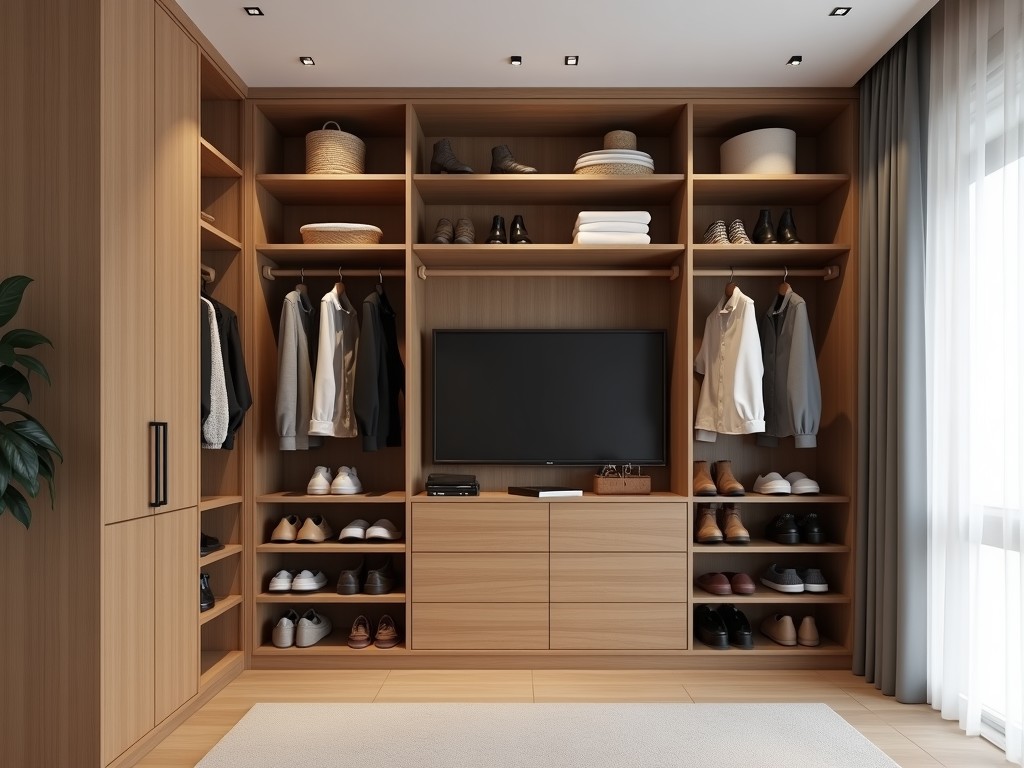
Shoe shelves serve as the functional interface between footwear inventory and closet systems, requiring precise dimensional control, sufficient load bearing, and seamless integration with existing
Inquire NowShoe shelves serve as the functional interface between footwear inventory and closet systems, requiring precise dimensional control, sufficient load bearing, and seamless integration with existing hardware.
The primary design variables are shelf span, depth, and vertical clearance, which directly influence deflection under typical shoe loads and affect user accessibility.
Common structural materials include cold‑rolled steel (1.2 mm–2.0 mm thickness), extruded aluminum alloys (6063‑T5), and high‑density particleboard with melamine finish, each offering distinct strength‑to‑weight ratios and corrosion resistance.
Design targets a maximum deflection of L/200 under a uniformly distributed load of 20 kg per shelf, ensuring long‑term usability without perceptible sag.
| Material | Maximum Span (mm) | Uniform Load Capacity (kg) |
|---|---|---|
| Cold‑rolled steel 1.5 mm | 900 | 25 |
| Aluminum 6063‑T5 2.0 mm | 750 | 20 |
| Particleboard 18 mm | 600 | 15 |
Each project begins with a detailed specification sheet capturing width, depth, height, mounting method, and finish requirements, which feeds into a parametric CAD model for rapid iteration.
Inspection includes dimensional verification (±0.5 mm), weld penetration analysis for steel units, adhesion testing of coatings (ASTM D3359), and proof‑load testing to 150 % of rated capacity.
Shoe shelves integrate seamlessly with modular closet systems because they can be mounted to standard vertical uprights, accommodate varying shoe heights, and maintain a low profile that preserves overall closet depth.
Queenswood delivers modern bathroom solutions through original design, advanced manufacturing, and reliable quality for customers worldwide.


Middle of Xingang East Road, Haizhu District, Guangzhou City, Guangdong Province

