
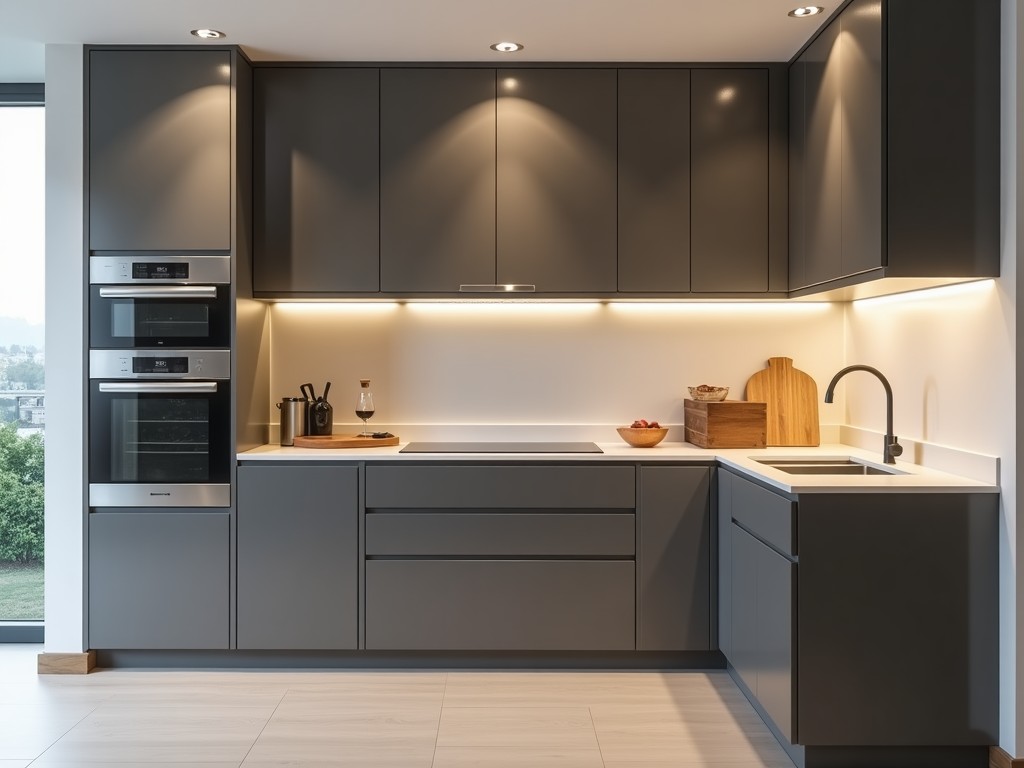
Stainless steel cabinets are selected for industrial kitchens where hygiene, chemical resistance, and structural durability are critical. The material’s non‑porous surface prevents bacterial growth
Inquire NowStainless steel cabinets are selected for industrial kitchens where hygiene, chemical resistance, and structural durability are critical. The material’s non‑porous surface prevents bacterial growth and facilitates routine cleaning with detergents or steam. Custom fabrication allows the cabinets to fit specific workflow layouts, equipment clearances, and regulatory requirements.
The primary alloys used are AISI 304 and AISI 316 stainless steel. Grade 304 offers good corrosion resistance in typical food‑processing environments, while grade 316 adds molybdenum for enhanced resistance to chlorides and acidic cleaning agents. Sheet thickness typically ranges from 0.8 mm to 1.5 mm, selected based on load requirements and door size. Surface finishes include brushed No. 4, mirror polish, or a passivated matte finish, each affecting both appearance and cleaning ease.
Cabinets are built as modular units that can be combined to create continuous runs, island configurations, or wall‑mounted storage. Dimensions are defined per project, with standard height increments of 50 mm to accommodate varying countertop heights and equipment clearance. Door styles, hinge types, and interior accessories are chosen to match operational ergonomics and cleaning protocols.
Production begins with CNC laser cutting of stainless steel sheets to precise part profiles. Bending is performed on CNC press brakes to achieve exact angles and radii. Seams are joined using TIG welding, followed by grinding and polishing to achieve the specified finish. Passivation treatment removes free iron and enhances the protective oxide layer, improving corrosion resistance.
Each cabinet undergoes dimensional verification against the approved drawing using calibrated calipers and coordinate‑measuring machines. Visual inspection checks for weld uniformity, surface defects, and finish consistency. Salt‑spray testing (ASTM B117) is conducted on representative samples to validate corrosion resistance, typically targeting 500 hours for grade 304 and 1000 hours for grade 316. Load testing confirms shelf capacity, usually rated for 150 kg per shelf uniformly distributed.
In food‑processing plants, the cabinets provide a non‑corrosive storage solution for utensils, ingredients, and packaging materials, supporting compliance with FDA and HACCP standards. Pharmaceutical facilities benefit from the material’s resistance to aggressive sanitizers and its ability to maintain a particle‑free environment. Laboratories and cleanrooms rely on the smooth, easy‑to‑clean surfaces to prevent cross‑contamination and meet ISO 14644‑1 cleanliness classes.
| Parameter | Typical Value | Notes / Customization |
|---|---|---|
| Material Grade | AISI 304 or AISI 316 | Selected per environmental exposure |
| Sheet Thickness | 0.8 mm – 1.5 mm | Based on load and door size |
| Height Range | 800 mm – 2200 mm | Customizable in 10 mm increments |
| Depth | 400 mm – 700 mm | Standard or custom |
| Load Capacity per Shelf | ≤150 kg (UDL) | Reinforced options available |
| Surface Finish | Brushed No. 4, Mirror, Passivated Matte | Affects cleaning ease and appearance |
| Corrosion Resistance (Salt Spray) | 304: ≥500 h; 316: ≥1000 h | ASTM B117, sample based |
| Fire Rating | Non‑combustible (A1) | Per EN 13501‑1 |
To begin a custom project, provide the required dimensions, material grade, finish, and any accessory needs. Our engineering team will review the specifications and return a detailed quotation with lead‑time estimates.
Queenswood delivers modern bathroom solutions through original design, advanced manufacturing, and reliable quality for customers worldwide.


Middle of Xingang East Road, Haizhu District, Guangzhou City, Guangdong Province

