
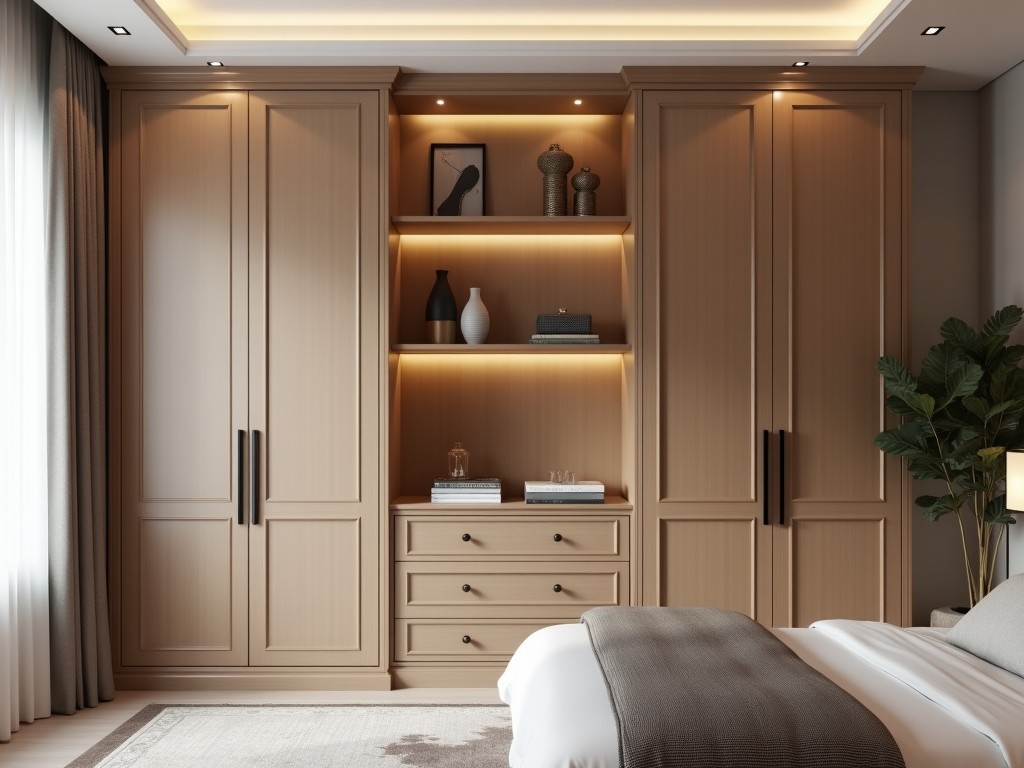
The price of a custom wardrobe is determined by measurable design parameters rather than vague quality claims. Primary variables include panel thickness, material density, hardware load rating,
Inquire NowThe price of a custom wardrobe is determined by measurable design parameters rather than vague quality claims. Primary variables include panel thickness, material density, hardware load rating, finish type, and labor hours required for assembly. Understanding each factor allows procurement professionals to compare quotes on a technical basis.
Four main elements influence the final cost: substrate selection, dimensional complexity, door mechanism, and interior accessories. Each contributes a calculable amount to the total bill of materials and machining time.
Panel substrates vary in density, moisture resistance, and surface finish. The table below shows typical cost ranges for common wardrobe materials, expressed per linear foot of finished panel (including edge banding). Values are indicative and adjust according to project‑specific thickness and finish.
| Material | Typical Cost Range (USD/linear foot) | Density (kg/m³) & Thickness (mm) |
|---|---|---|
| Particle board with melamine laminate | $45 – $70 | 600–650, 18 mm |
| MDF with PVC foil | $55 – $85 | 700–750, 18 mm |
| Plywood core with veneer | $80 – $120 | 500–550, 18 mm |
| Solid wood (oak, maple) | $150 – $250 | 600–750, 20 mm |
Beyond the base panel, specific design choices add predictable cost increments. These are quantified as additional material, machining, or hardware expenses.
Lead time depends on panel cutting complexity and finish curing. For a standard 2‑door wardrobe (2400 mm × 600 mm × 600 mm) with laminate finish, the schedule is:
Total typical lead time: 5–7 business days, excluding shipping.
Each unit undergoes a standardized inspection to verify dimensional accuracy, surface integrity, and hardware function. The checklist is applied before packaging.
Custom wardrobes serve distinct functional roles depending on the environment. In residential settings, they optimize bedroom storage while matching interior design schemes through selectable finishes and hardware. In commercial contexts such as hotels, dormitories, or retail back‑of‑house, they provide durable, high‑cycle storage solutions where load capacity and ease of maintenance are critical. The ability to specify panel thickness, door type, and interior accessories allows the product to meet specific usage patterns without over‑engineering.
Q: Can dimensions be customized beyond standard heights?
A: Yes. Panel cutting is driven by CNC nesting, allowing any height, width, or depth within material sheet limits. Custom sizes affect material waste and are reflected in the quote.
Q: What information is required before a quotation?
A: Required inputs include overall dimensions, door type (hinged or sliding), panel material preference, interior accessory list, and finish specification. Providing a sketch or CAD file reduces estimation time.
Q: Which materials are available for high‑moisture areas?
A: Moisture‑resistant MR‑MDF (density 720 kg/m³, thickness 18 mm) or marine‑grade plywood are recommended. Both retain dimensional stability under relative humidity up to 80 %.
Q: How is quality inspected before shipment?
A: Each unit passes the QC checklist detailed above, including dimensional checks, adhesion testing, and functional hardware verification. A final visual inspection confirms surface finish uniformity.
Q: What packaging methods protect the product during transit?
A: Units are wrapped in polyethylene film, placed in corrugated cardboard sleeves with corner protectors, and strapped to pallets. For LTL shipments, additional foam edge guards are added.
Queenswood delivers modern bathroom solutions through original design, advanced manufacturing, and reliable quality for customers worldwide.


Middle of Xingang East Road, Haizhu District, Guangzhou City, Guangdong Province

