
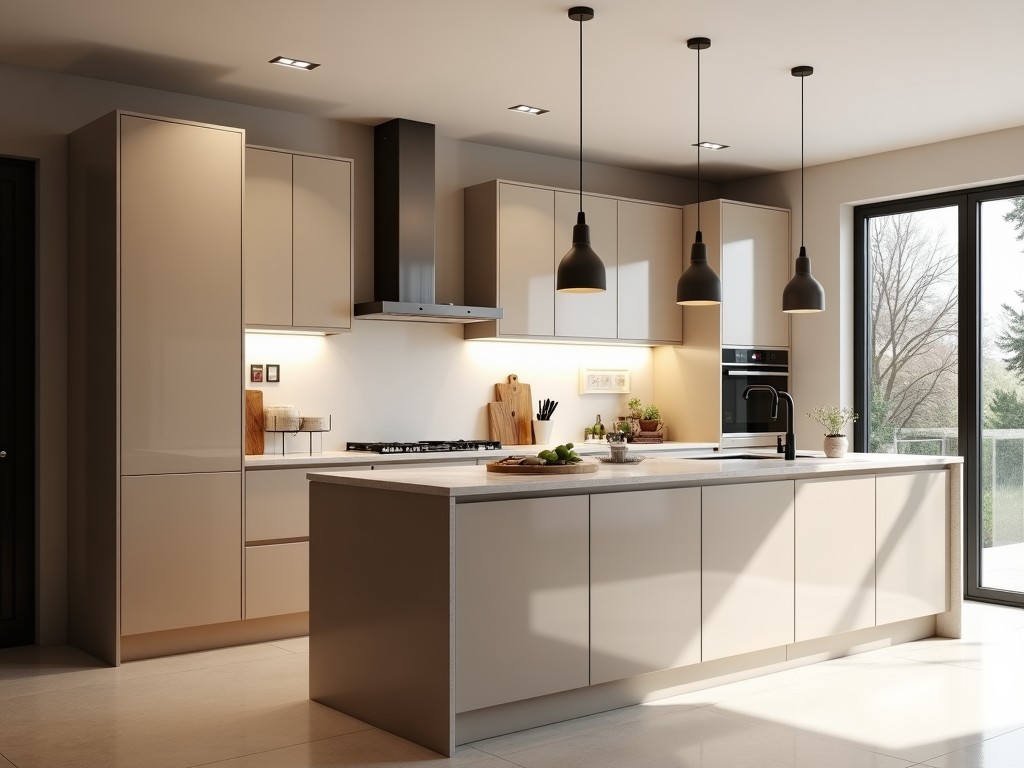
This page describes the engineering considerations for ordering custom kitchen cabinets directly from manufacturers in China, focusing on material selection, dimensional tolerances, joinery methods,
Inquire NowThis page describes the engineering considerations for ordering custom kitchen cabinets directly from manufacturers in China, focusing on material selection, dimensional tolerances, joinery methods, surface finish options, and quality‑control procedures that affect long‑term performance in commercial food‑service environments.
Cabinets are built from engineered wood panels or solid hardwood, selected based on required load‑bearing capacity, humidity resistance, and machining stability. Panel thickness typically ranges from 16 mm to 25 mm for carcass panels, with door thicknesses of 18 mm to 22 mm.
Custom dimensions are achieved through CNC cutting tolerances of ±0.2 mm on panel edges, allowing seamless alignment of carcass, doors, and drawers. Standard cabinet widths increment in 100 mm steps; height and depth can be adjusted in 50 mm increments to match site‑specific layouts.
Joinery methods affect structural stiffness. Common options include:
Finish selection influences both appearance and resistance to cleaning agents, steam, and impact. Available finishes are applied via UV‑cured or water‑based processes, with film thickness typically 30‑50 µm.
Hardware is specified by load rating and corrosion resistance:
Production follows a sequential flow: panel cutting → edge banding → CNC routing for hardware holes → assembly → finishing → inspection. Each stage incorporates measurable checkpoints to reduce variation.
| Inspection Point | Typical Specification | Measurement Method |
|---|---|---|
| Panel thickness | ±0.15 mm of nominal | Caliper, 5 points per panel |
| Edge band adhesion | Peel strength ≥ 1.2 N/mm | ASTM D903 peel test |
| Door squareness | Diagonal difference ≤ 0.5 mm | Caliper measurement of diagonals |
| Finish film thickness | 30‑50 µm | Dry film thickness gauge |
| Hardware torque | Cam lock 0.8 Nm ±10% | Torque wrench |
Final random sampling follows AQL 1.0 for major defects and AQL 2.5 for minor defects, per ISO 2859‑1.
The cabinets are intended for environments where hygiene, durability, and ease of maintenance are critical. Typical installations include:
Design considerations such as toe‑kick height (typically 100 mm), clearance for appliances (minimum 50 mm ventilation gap), and integration of service conduits (electrical, plumbing) are addressed during the customization phase.
To prevent damage during ocean freight, cabinets are packed in a three‑layer system:
Each pallet is labeled with barcodes containing SKU, dimensions, and destination code. Typical container utilization is 90 % volume when stacked flat, reducing per‑unit shipping cost.
To begin a quotation, please provide your project layout, material preferences, and required hardware specifications. Our engineering team will review the documents and return a detailed cost breakdown, lead time, and packaging plan within two business days.
Request QuoteQueenswood delivers modern bathroom solutions through original design, advanced manufacturing, and reliable quality for customers worldwide.


Middle of Xingang East Road, Haizhu District, Guangzhou City, Guangdong Province

