
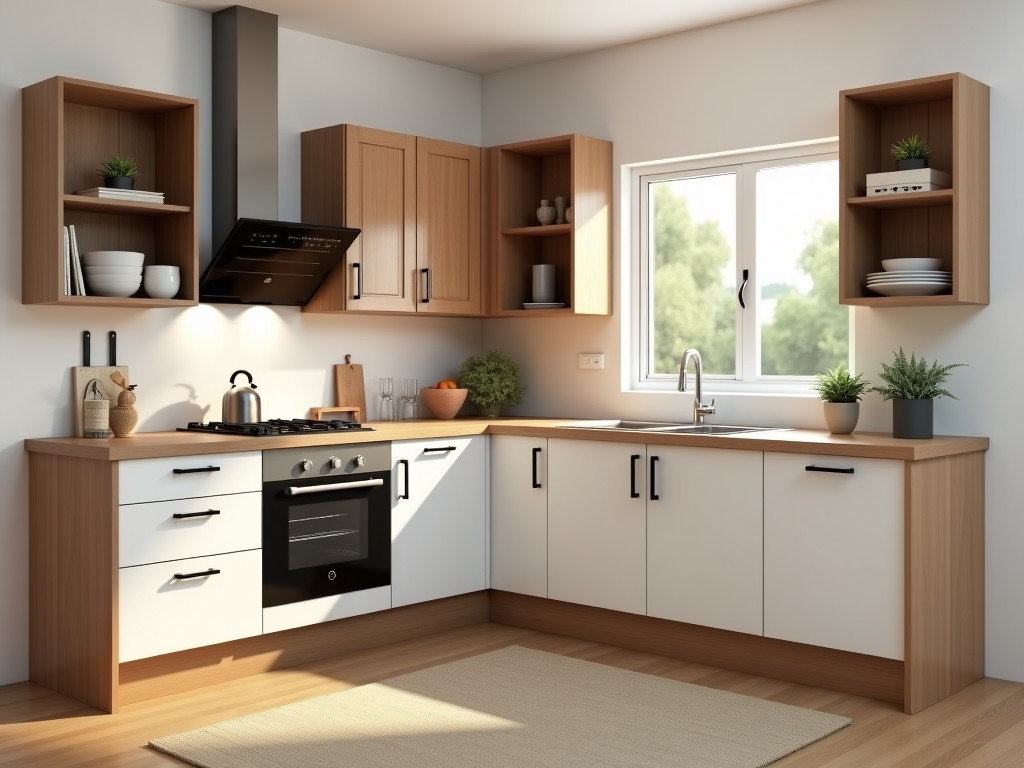
Industrial kitchens demand storage that withstands constant cleaning, heavy loads, and strict hygiene standards. Custom‑built cabinets allow engineers to match exact workflow dimensions, integrate
Inquire NowIndustrial kitchens demand storage that withstands constant cleaning, heavy loads, and strict hygiene standards. Custom‑built cabinets allow engineers to match exact workflow dimensions, integrate specialized accessories, and select materials that resist corrosion from steam, acids, and frequent wash‑downs.
Most units are fabricated from either 304 or 316 grade stainless steel, chosen for its resistance to pitting and crevice corrosion in wet environments. Sheet thickness typically ranges from 1.0 mm to 1.5 mm for doors and 1.2 mm to 2.0 mm for carcass panels, providing sufficient rigidity to support shelf loads of 150 kg m⁻² or more without deflection.
Alternative substrates include marine‑grade plywood with a food‑safe laminate finish or powder‑coated carbon steel for applications where weight reduction is critical. All joints are continuously welded or fastened with stainless steel rivets, followed by grinding to a smooth, crevice‑free surface that facilitates cleaning and prevents bacterial harborage.
Design flexibility covers overall dimensions, internal layout, door styles, and accessory integration. Engineers can specify exact height, width, and depth to fit irregular spaces or to align with equipment clearances.
Cabinets must accommodate workflow pathways, allowing unimpeded movement of staff and carts while maintaining required clearance distances from cooking equipment. Modular panel systems enable re‑configuration as processes evolve, reducing the need for costly demolition and reinstallation.
Surfaces are designed with sealed edges and minimal crevices to satisfy NSF/ANSI 2 sanitation standards, facilitating wipe‑down and pressure‑wash procedures. Load calculations account for dynamic forces from sliding doors and impact from kitchen tools, ensuring long‑term structural integrity.
Each unit undergoes dimensional verification against the approved CAD model, with tolerances held to ±0.5 mm for critical interfaces. Weld integrity is inspected visually and, where required, by dye penetrant testing to detect micro‑cracks that could harbor contaminants.
Finish adhesion is assessed using cross‑hatch tape tests per ASTM D3359, ensuring coating durability under repeated chemical exposure. Load testing applies a uniformly distributed weight equal to 1.5 times the rated capacity for a duration of 24 hours, confirming no permanent deformation.
| Parameter | Typical Range | Notes |
|---|---|---|
| Overall Height | 800 mm – 2200 mm | Customizable in 10 mm increments |
| Depth | 400 mm – 700 mm | Includes door thickness |
| Width (per module) | 300 mm – 1200 mm | Multiple modules can be ganged |
| Shelf Load Capacity | 150 kg m⁻² – 300 kg m⁻² | Dependent on shelf thickness and support spacing |
| Door Thickness | 1.0 mm – 1.5 mm | Stainless steel or laminated composite |
| Finish Type | Brushed satin, mirror, powder coat | All finishes meet food‑contact standards |
Custom cabinets are employed in restaurant lines, hotel banquet kitchens, food‑processing plants, and central production facilities where hygiene, durability, and adaptability are paramount. By aligning storage with specific equipment footprints, they reduce unnecessary motion, improve inventory control, and support compliance with HACCP‑based safety programs.
Yes. Each cabinet is built to the exact height, width, and depth supplied by the customer, allowing accommodation of columns, pipe chases, or uneven walls without filler strips.
To generate an accurate quote we need the overall dimensions, material preference (304/316 stainless, powder coat, etc.), desired shelf configuration, door type, and estimated quantity. Any special accessories such as drawers or electrical conduits should also be listed.
For high‑chloride or acidic settings, 316 stainless steel with a passivated finish is standard. In less aggressive conditions, 304 stainless provides sufficient resistance at lower cost. Alternative coatings such as epoxy‑based powders are available upon request.
Final inspection includes dimensional checks, weld visual examination, finish adhesion testing, and a functional test of doors and hardware. Documentation of these checks is provided with each shipment.
Units are wrapped in protective polyethylene film, placed on corrugated pallets, and secured with steel strapping. Corner boards and moisture‑absorbent desiccants are added for overseas shipments to prevent corrosion during transit.
To begin the quotation process, provide your project’s dimensional requirements, material preferences, load expectations, and any needed accessories. Our engineering team will review the details and return a detailed proposal including lead time, pricing, and compliance documentation.
Submit Quote RequestQueenswood delivers modern bathroom solutions through original design, advanced manufacturing, and reliable quality for customers worldwide.


Middle of Xingang East Road, Haizhu District, Guangzhou City, Guangdong Province

