
When procurement managers evaluate cabinetry for large‑scale projects, the ability to specify exact dimensions, joinery methods, and finish systems reduces field modifications and warranty risk. This
Inquire NowWhen procurement managers evaluate cabinetry for large‑scale projects, the ability to specify exact dimensions, joinery methods, and finish systems reduces field modifications and warranty risk. This page explains how a custom cabinet builder translates architectural drawings into production‑ready units, focusing on measurable engineering parameters that influence cost, durability, and installation speed.
The workflow begins with a CAD model that incorporates panel thickness, edge banding width, and hinge cup depth. Tolerances are set to ±0.5 mm for carcass dimensions and ±0.2 mm for door reveal, ensuring repeatable fit across hundreds of units. Engineers review load paths for shelf brackets, calculating maximum uniform load based on material modulus and fastener shear capacity.
Bill of materials (BOM) generation links each part to a specific material grade, finish code, and hardware part number, enabling automatic nesting optimization that typically yields material utilization rates above 85 %. Change orders are tracked via revision numbers, allowing traceability from design revision to shop floor work order.
Cabinet carcasses are commonly constructed from three core substrates, each with distinct mechanical properties that affect deflection, screw holding strength, and moisture resistance.
| Substrate | Typical Density (kg/m³) | Modulus of Elasticity (MPa) | Moisture Expansion (%) |
|---|---|---|---|
| Particleboard (PB) | 650 | 2500 | 0.3 |
| Medium Density Fiberboard (MDF) | 720 | 3000 | 0.4 |
| Plywood (Birch, 5‑ply) | 580 | 4500 | 0.2 |
Finish systems are specified by wet film thickness (WFT) and cure schedule. A typical UV‑cured polyurethane coating achieves a surface hardness of 2H (pencil hardness) and a gloss level of 85 % after 2 minutes at 80 °C, providing resistance to common kitchen solvents and staining agents.
In‑process inspection uses coordinate measuring machines (CMM) to verify carcass squareness within 0.3 mm diagonal difference. Edge banding adhesion is tested via peel strength, targeting a minimum of 1.2 N/mm according to ISO 2409. Final audit includes a functional test of door swing, measuring hinge torque deviation not exceeding 5 % of spec.
Statistical process control (SPC) charts track critical dimensions; a Cpk ≥ 1.33 is required before release to shipping. Non‑conforming parts are segregated, reworked, or scrapped, with a target first‑pass yield above 96 %.
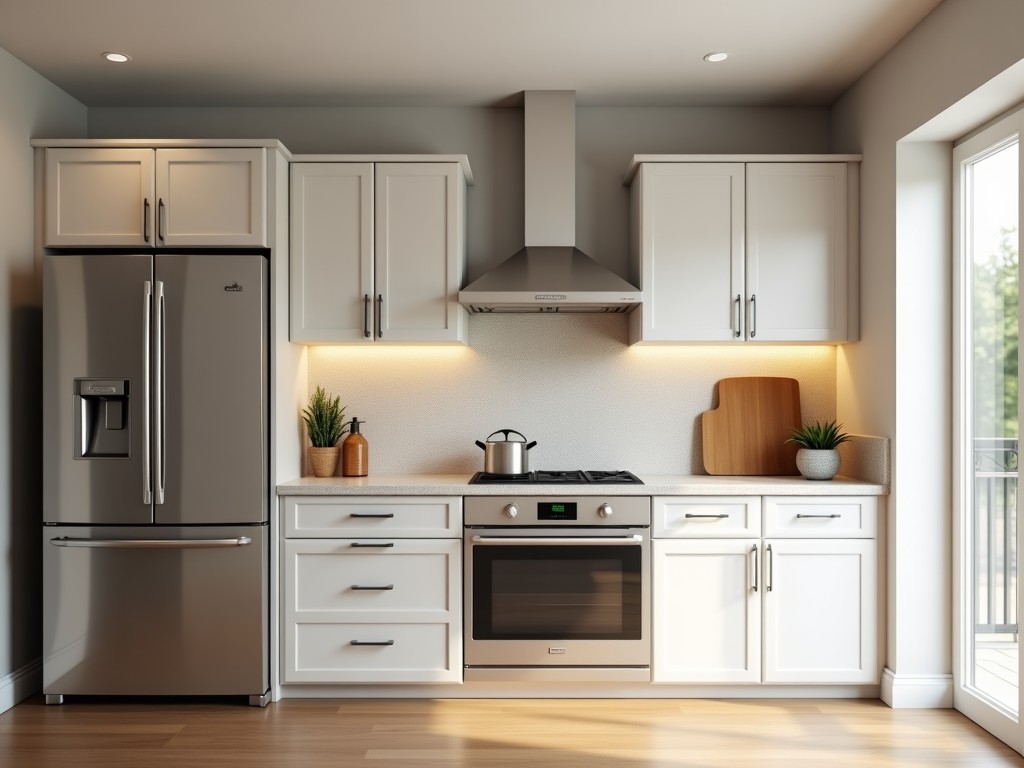
Custom kitchen cabinets serve environments where layout flexibility and durability are paramount.
Beyond substrate and finish, buyers can specify functional and aesthetic parameters that directly affect installation time and lifecycle cost.
To begin a custom cabinet project, provide the following technical data:
Submit your inquiry via the contact form and a technical sales engineer will respond with a detailed quotation, lead time estimate, and sample panel options within two business days.
Queenswood delivers modern bathroom solutions through original design, advanced manufacturing, and reliable quality for customers worldwide.


Middle of Xingang East Road, Haizhu District, Guangzhou City, Guangdong Province

