
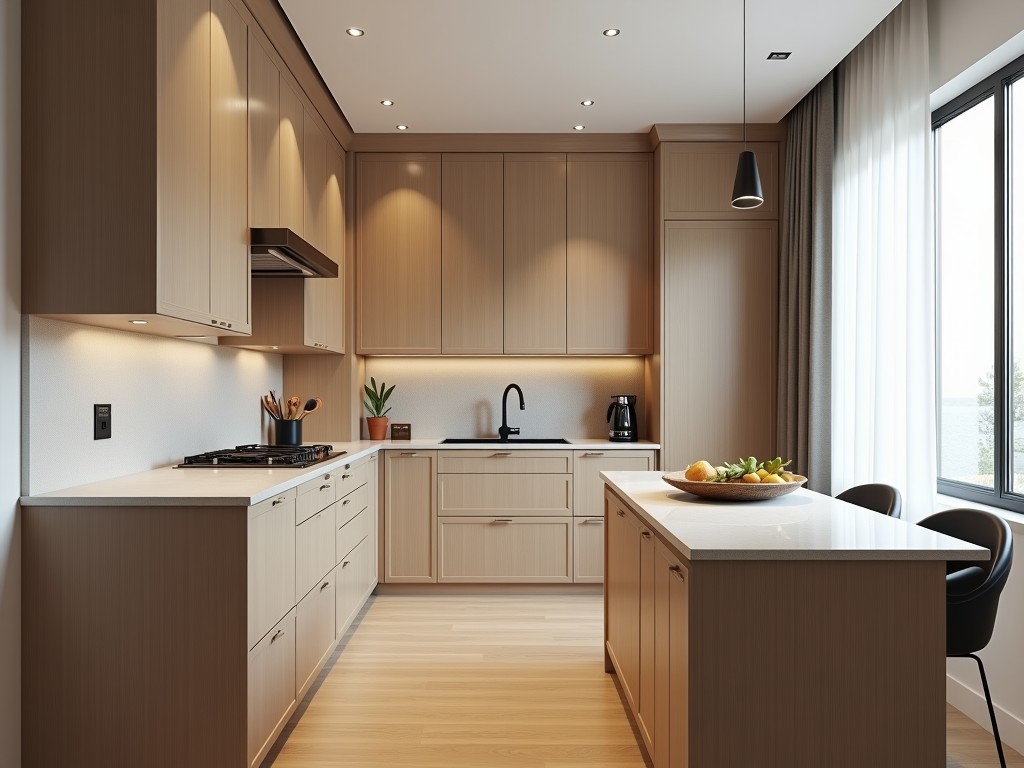
Procurement teams benefit from a clear breakdown of cost variables when evaluating custom cabinetry for industrial or commercial kitchens. The total price consists of material expenditure, labor
Inquire NowProcurement teams benefit from a clear breakdown of cost variables when evaluating custom cabinetry for industrial or commercial kitchens.
The total price consists of material expenditure, labor hours, hardware selection, finishing processes, and logistics. Each component can be quantified to support comparative quoting.
Material cost typically ranges from $120 to $300 per linear foot depending on substrate and veneer grade. Labor accounts for roughly 35‑45% of the total, reflecting cabinet box assembly, door fabrication, and installation.
Cabinet dimensions directly influence material waste and machining time; non‑standard heights or depths increase scrap rates by 5‑15%.
Door style complexity adds labor; a flat‑panel door may require 0.8 hr per unit whereas a raised‑panel with molding can consume 2.2 hr.
Finish selection impacts both material and process cost; a catalyzed lacquer system adds $8‑$12 per square foot versus a basic melamine overlay.
Hardware choices such as soft‑close hinges or full‑extension slides contribute $2‑$5 per door, varying by load rating and cycle life.
The following table presents average cost brackets for common project scales, expressed in US dollars per linear foot of cabinet run.
| Project Scope | Material Tier | Average Cost (USD/ft) | Typical Lead Time |
|---|---|---|---|
| Small retrofit (≤10 ft) | Stock laminate | $140‑$180 | 3‑4 weeks |
| Medium renovation (10‑30 ft) | Veneer‑grade MDF | $210‑$260 | 4‑5 weeks |
| Large custom (>30 ft) | Hardwood or plywood core | $280‑$340 | 5‑7 weeks |
Values reflect typical market conditions; actual quotes depend on geographic labor rates and material availability.
Substrate choice determines stiffness, moisture resistance, and fastener holding power. Particleboard offers the lowest cost but exhibits higher deflection under load compared to plywood.
Veneer thickness influences surface durability; a 0.6 mm phenolic‑backed veneer resists abrasion 30% better than a 0.3 mm paper‑based overlay.
Edge banding material (PVC, ABS, or wood veneer) adds $0.50‑$1.20 per linear foot and affects seam visibility after finishing.
Features such as integrated lighting, pull‑out pantry systems, or custom interior dividers increase both design hours and installation time.
Each additional custom accessory typically adds 0.5‑1.5 hr of labor per cabinet unit, depending on hardware integration.
CNC programming for non‑rectangular panels incurs a setup fee of $150‑$250 per distinct shape, amortized over the production run.
Lead time is driven by material procurement, CNC schedule, finishing cure, and quality inspection. Standard lead times assume material stock availability.
Expedited options can reduce schedule by 30‑40% through parallel processing and overtime, at a premium of 15‑20% on total cost.
Communication of final CAD models and hardware specifications at least two weeks prior to production start minimizes delays.
Dimensional verification is performed on a sampling basis; critical dimensions such as carcass depth and door reveal are checked to ±0.5 mm tolerance.
Finish adhesion is assessed via cross‑hatch tape test per ASTM D3359, targeting a rating of 5B or better for high‑wear environments.
Load testing of shelves and drawers follows ANSI/BIFMA standards, ensuring a safety factor of at least 1.5 over expected service loads.
Custom kitchen cabinets are specified in food‑processing facilities where wash‑down resistance and seamless surfaces are required to meet sanitation codes.
In laboratory environments, cabinets must accommodate chemical‑resistant finishes and provide integrated service conduits for gas and data lines.
For corporate cafeterias, modular designs enable rapid reconfiguration to support changing menu offerings and seating layouts.
To receive a detailed quote tailored to your project specifications, provide the required layout drawings, material preferences, and hardware list.
Our engineering team will review the documents and return a comprehensive cost breakdown within two business days.
Request a QuoteQueenswood delivers modern bathroom solutions through original design, advanced manufacturing, and reliable quality for customers worldwide.


Middle of Xingang East Road, Haizhu District, Guangzhou City, Guangdong Province

