
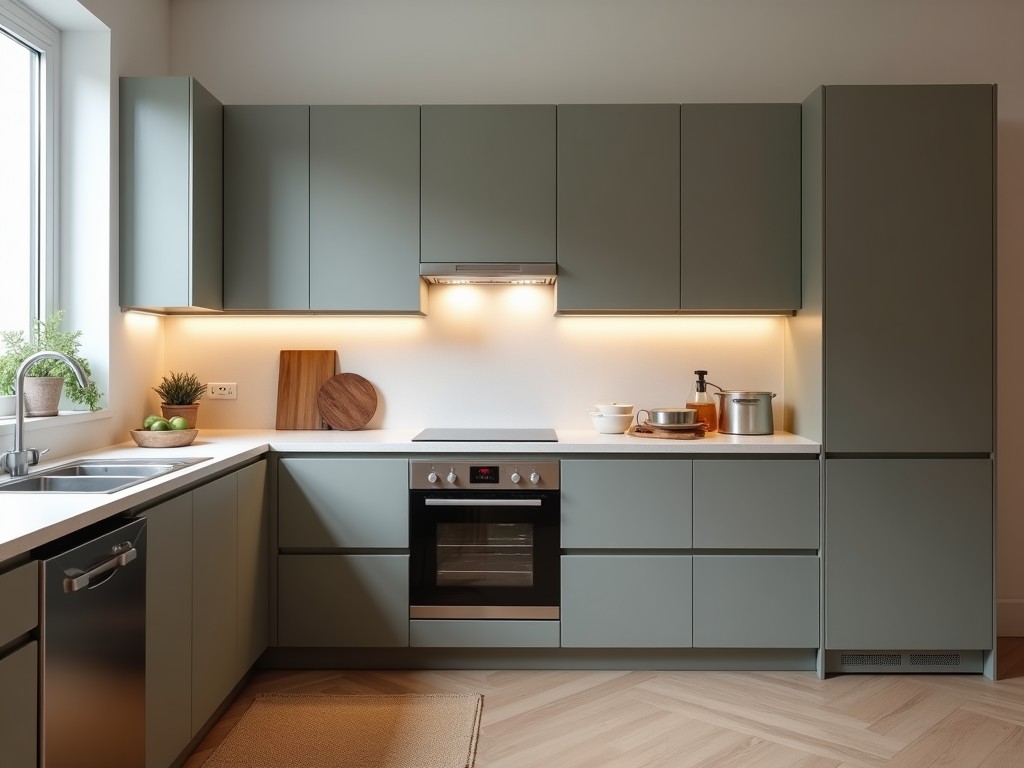
These cabinets are engineered for high‑volume installations where durability and precise fit are critical. Material choice directly influences corrosion resistance, load capacity, and finish
Inquire NowThese cabinets are engineered for high‑volume installations where durability and precise fit are critical.
Material choice directly influences corrosion resistance, load capacity, and finish longevity.
Customization begins with exact dimensional requirements derived from the kitchen layout.
Production relies on CNC laser cutting for blank formation, followed by precision brake bending to achieve tight tolerances.
Robotic welding ensures consistent joint strength, while automated powder‑coating lines apply uniform film thickness.
Inspection protocols verify dimensional accuracy, coating adhesion, and structural integrity before shipment.
Each batch undergoes a 24‑hour salt‑spray test (ASTM B117) and a shelf‑load test of 150 kg per level.
In commercial kitchens, metal cabinets resist moisture, heat, and chemical exposure better than wood‑based alternatives.
Laboratories and medical facilities benefit from the non‑porous surface, which simplifies cleaning and meets hygiene standards.
Key technical parameters are presented below for reference.
| Parameter | Typical Value | Notes |
|---|---|---|
| Material | Cold‑rolled steel / Stainless 304 | Selected per project requirements |
| Thickness | 1.2 mm – 2.0 mm | Tolerance ±0.1 mm |
| Door overlay | 18 mm – 25 mm | Customizable |
| Hinge type | Concealed, soft‑close | Load rating 40 kg per hinge |
| Shelf load capacity | 150 kg | Uniformly distributed |
| Finish thickness | 60 μm – 80 μm powder coating | Adhesion >5 MPa |
| Dimensional tolerance | ±0.5 mm overall | Measured at 20 °C |
Frequently asked questions address typical concerns of procurement engineers and project managers.
To request a formal quotation, provide project dimensions, material preferences, and required hardware.
Submit your specifications to begin the quoting process.
Queenswood delivers modern bathroom solutions through original design, advanced manufacturing, and reliable quality for customers worldwide.


Middle of Xingang East Road, Haizhu District, Guangzhou City, Guangdong Province

