
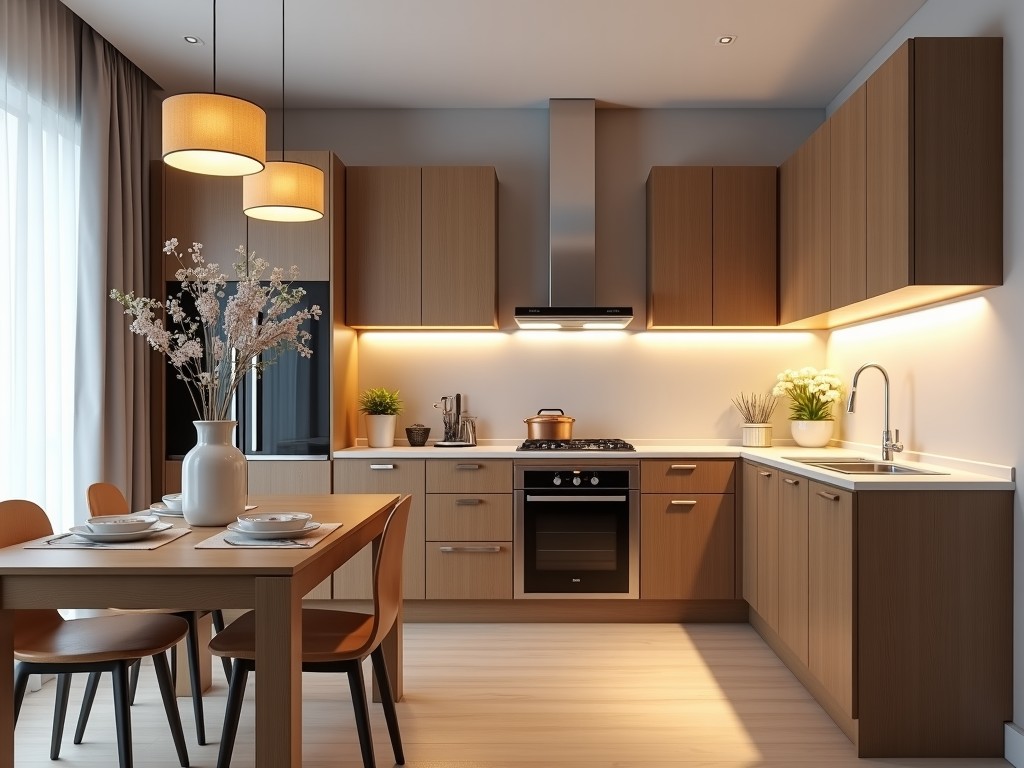
Industrial buyers evaluate cabinetry projects by analyzing material selections, dimensional tolerances, hardware specifications, and production timelines before committing to a purchase. This guide
Inquire NowIndustrial buyers evaluate cabinetry projects by analyzing material selections, dimensional tolerances, hardware specifications, and production timelines before committing to a purchase.
This guide explains the technical factors that influence cost, outlines typical price ranges, and shows how customization options affect the final quotation.
The base price of a cabinet unit originates from raw material cost, which varies with species, grade, and panel thickness.
Additional cost contributors include edge banding type, hinge and slide hardware ratings, finish systems (e.g., UV‑cured lacquer vs. melamine), and any required certifications such as NSF/ANSI 2 for food‑contact surfaces.
Labor rates are influenced by the complexity of joinery (dovetail, cam lock, or dowel) and the level of CNC programming needed for non‑standard geometries.
| Material | Core Thickness (mm) | Typical Price Range (USD per linear foot) | Common Applications |
|---|---|---|---|
| Particleboard (MR) | 16–18 | $12–$18 | Back‑of‑house storage, low‑traffic pantry |
| MDF (UL‑rated) | 16–19 | $15–$22 | Paint‑grade doors, healthcare cabinetry |
| Plywood (Birch, Grade A) | 18–22 | $20–$30 | High‑end restaurant kitchens, laboratory casework |
| Solid Wood (Hard Maple) | 19–25 | $28–$40 | Executive dining, boutique hospitality |
Values are indicative; final pricing depends on order volume, finish selection, and regional logistics.
Each option should be evaluated against the project’s functional lifecycle cost rather than only the upfront price.
Cabinet panels are cut on CNC routers with a positional tolerance of ±0.1 mm, ensuring repeatable fit for modular installations.
Edge banding is applied using hot‑melt EVA adhesive with a line speed of 12 m/min, providing a bond strength exceeding 1.8 MPa.
Finish curing occurs in UV tunnels delivering 365 nm exposure at 120 mJ/cm², resulting in a surface hardness of 2H (pencil test).
Standard lead time for a typical 50‑unit run of standard‑size cabinets, production lead time averages 10–12 business days after drawing approval.
Expedited schedules are available but may increase unit cost by 10‑18% due to overtime and priority material handling.
| Cost Component | Typical Percentage of Unit Price | Notes |
|---|---|---|
| Raw Material | 45–55% | Varies with species and board grade |
| Labor & Machining | 20–25% | Includes CNC time, assembly, and finishing |
| Hardware & Accessories | 10–15% | Depends on hinge, slide, and pull specifications |
| Finishing & Coating | 8–12% | UV lacquer, paint, or melamine overlay |
| Packaging & Logistics | 3–6% | Flat‑pack, corner protection, palletizing |
Percentages are averages; actual splits are provided in the formal quotation based on the final bill of materials.
In restaurant kitchens, cabinets must resist moisture, frequent cleaning, and impact from carts; therefore, marine‑grade plywood with a UV‑cured finish is often selected.
Healthcare facilities require surfaces that meet NSF/ANSI 2 standards for food‑contact and allow for easy disinfection; hence, seamless edgebanding and non‑porous finishes are specified.
Laboratory casework demands chemical resistance; cabinets are built from polypropylene‑coated particleboard or stainless‑steel liners with epoxy‑painted exteriors.
Understanding the environmental stresses of each sector allows engineers to match material properties to performance criteria, reducing the risk of premature failure.
Dimensional verification is performed on the first article using a calibrated CMM, checking cabinet squareness within 0.5 mm and door reveal uniformity.
Finish adhesion is validated by cross‑hatch tape testing (ASTM D3359) with a target rating of 5B.
Load testing of drawer slides is carried out per ANSI/BHMA A156.9, confirming dynamic capacity of at least 34 kg per slide for heavy‑duty models.
All inspection results are documented and made available to the buyer upon request, supporting traceability and compliance audits.
Yes. Cabinet height, width, and depth can be adjusted in 1 mm increments; custom stiles and rails are generated from the approved CAD model.
A preliminary layout showing cabinet runs, appliance cutouts, and desired finish specifications. For complex projects, a DXF or DWG file of the millwork plan accelerates the quoting process.
Marine‑grade plywood, PVC‑coated particleboard, and stainless‑steel liners are offered; each includes a water‑resistant edge banding system.
Each unit undergoes a 10‑point checklist covering dimensions, hardware function, finish adhesion, and packaging integrity. Random sampling is applied to larger orders.
Flat‑packed units are placed in double‑wall corrugated cartons with corner protectors, foam edge guards, and stretch‑film wrapping. Palletized shipments include load‑secure straps and humidity indicator cards.
For standard configurations, lead time is 10–12 business days after drawing approval. Expedited options reduce this to 5–7 days with a corresponding cost adjustment.
Sample doors, drawer boxes, or finish swatches can be shipped via express courier. Charges are credited against the first order if the project proceeds.
To obtain a detailed, itemized quotation tailored to your facility’s specifications, please provide the layout drawings, material preferences, and any required certifications.
Our engineering team will review the documents, confirm tolerances, and return a formal price breakdown within two business days.
Queenswood delivers modern bathroom solutions through original design, advanced manufacturing, and reliable quality for customers worldwide.


Middle of Xingang East Road, Haizhu District, Guangzhou City, Guangdong Province

