
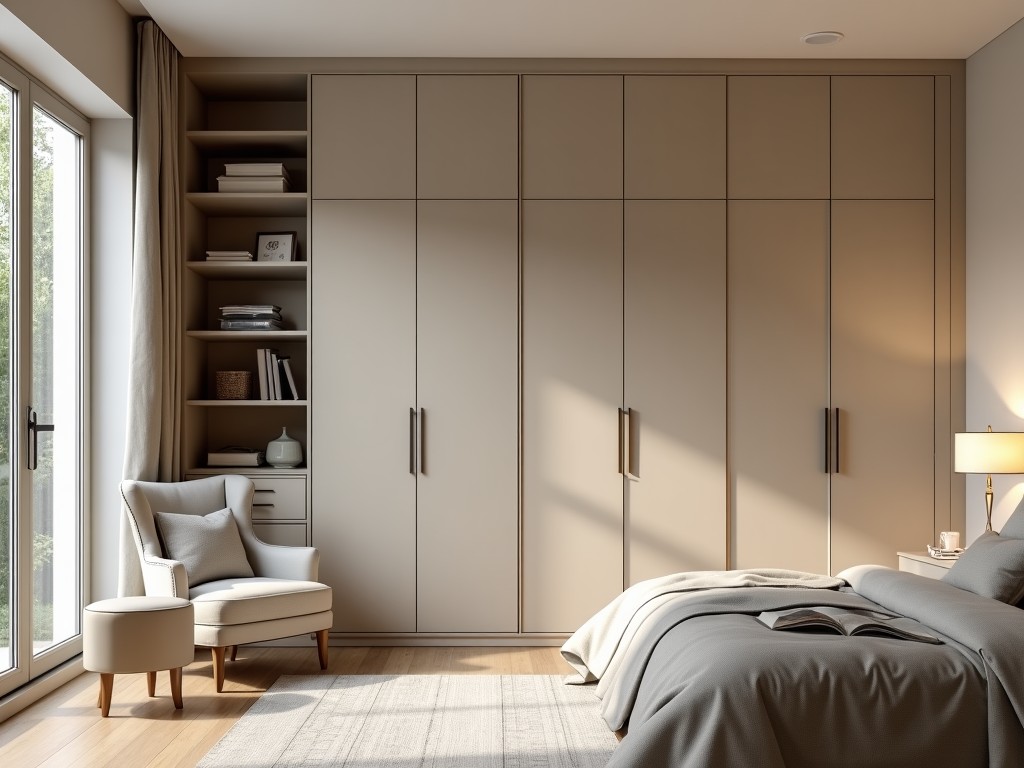
Custom closet systems are engineered to fit specific spatial constraints, storage requirements, and aesthetic preferences. The final price reflects a combination of material selection, design
Inquire NowCustom closet systems are engineered to fit specific spatial constraints, storage requirements, and aesthetic preferences. The final price reflects a combination of material selection, design complexity, hardware specifications, and installation labor.
Understanding the variables that influence pricing helps procurement teams evaluate quotes accurately and avoid unexpected expenses.
The base material establishes a significant portion of the unit cost, while finishes and edge treatments add incremental expenses.
| Material | Typical Cost Range (USD per linear foot) | Notes |
|---|---|---|
| Melamine‑coated particleboard | $40 – $70 | Cost‑effective, wide color palette, limited moisture resistance |
| Veneer‑faced MDF | $70 – $120 | Better aesthetics, moderate durability, requires edge sealing |
| Solid hardwood (maple, oak) | $120 – $200 | High durability, natural grain, higher machining time |
| Metal frame with laminate panels | $90 – $150 | Industrial look, strong load capacity, limited finish options |
Each additional design feature increases both material usage and installation time. For example, a pull‑out shoe rack adds approximately 0.5 hours of labor per unit, while integrated LED lighting requires wiring and driver installation, adding roughly 1 hour per linear foot.
Custom angles or non‑standard heights often necessitate CNC programming and specialized fixturing, which can raise the fabrication cost by 15‑25 % compared to a rectilinear layout.
Proper installation ensures long‑term performance and validates warranty coverage. Wall studs must be located and reinforced for heavy loads; floor leveling may be required for base cabinets to maintain door alignment.
Typical installation labor ranges from $50‑$80 per hour, with a standard reach‑in closet taking 4‑6 hours and a walk‑in system requiring 8‑12 hours depending on accessories.
While upfront expenditure varies, the total cost of ownership includes maintenance, durability, and adaptability. Melamine surfaces resist scratches but may chip under impact; solid wood can be refinished, extending service life beyond 15 years with proper care.
Investing in higher‑grade hardware reduces service calls; soft‑close mechanisms, for example, lower hinge replacement frequency by an estimated 40 % over a decade.
Detailed room dimensions, desired interior layout (number of shelves, drawers, hanging rods), material preferences, hardware specifications, and any site‑specific constraints such as uneven floors or obstructions.
Yes. CNC cutting allows for non‑standard widths, heights, and angles; however, custom geometry may increase fabrication time and cost due to additional programming and fixturing.
Each panel undergoes dimensional verification (±0.5 mm tolerance), surface inspection for finish uniformity, and hardware functional testing (hinge torque, slide smoothness). Random sampling is used for batch validation.
To obtain a detailed cost estimate tailored to your project, provide the required specifications via our inquiry form. Our engineering team will review the inputs and return a itemized quotation within two business days.
Submit Project DetailsQueenswood delivers modern bathroom solutions through original design, advanced manufacturing, and reliable quality for customers worldwide.


Middle of Xingang East Road, Haizhu District, Guangzhou City, Guangdong Province

